


CBN (Cannabinol) Nano-Hydro Water-Dispersible Tincture – 750mg | Hemp Compliant COA
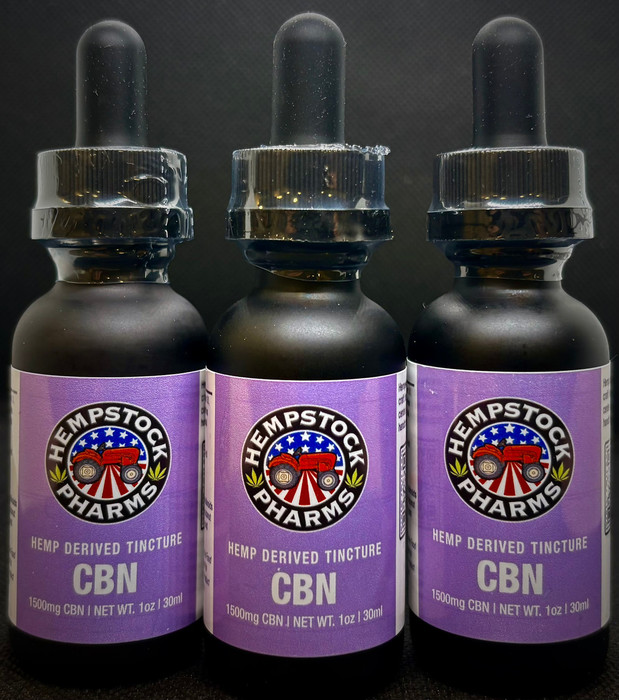
Hempstock Pharms CBN Nano-Hydro Tincture contains 750mg of cannabinol (CBN) isolate in a specialized cannabinoid formulation processed using advanced ultrasonic technology.
Our Nano-Hydro manufacturing process utilizes high-frequency sound waves to create extremely small oil droplets containing cannabinoids. This technology, known as ultrasonic nanoemulsification, is used in food science, nutraceutical formulation, and pharmaceutical research to improve the dispersion of oil-based compounds in water-based systems.
This water-dispersible formulation is designed for culinary applications where cannabinoids need to blend into liquid preparations, including craft mocktails, soothing bedtime beverages, and other water-based recipes. Unlike traditional oil-based tinctures, nanoemulsion technology allows cannabinoid-containing oil droplets to disperse throughout aqueous liquids rather than remaining as a separate oil layer.
Each 30mL bottle provides approximately 30 servings of 25mg CBN per 1mL serving.
What Is CBN?
Cannabinol (CBN) is a naturally occurring cannabinoid found in the Cannabis sativa plant. CBN is primarily formed through the oxidation and degradation of tetrahydrocannabinol (THC) over time, particularly when plant material is exposed to oxygen, heat, and light.
CBN is classified as a minor cannabinoid because it typically occurs in relatively low concentrations in freshly harvested hemp. Unlike THC, CBN has substantially lower activity at cannabinoid receptors and is generally considered to have low intoxicating potential.
What Is Nano-Hydro Technology?
Cannabinoids such as CBN are naturally lipophilic, meaning they have an affinity for fats and oils rather than water. This chemical characteristic makes them difficult to disperse uniformly into water-based liquids.
Our Nano-Hydro manufacturing process utilizes ultrasonic processing, also known as sonication, to create fine dispersions of cannabinoid-containing oil.
During sonication, high-frequency sound waves travel through the liquid, generating a physical phenomenon known as acoustic cavitation. Microscopic bubbles rapidly form and collapse, producing intense localized shear forces that can break larger oil droplets into much smaller droplets.
When combined with an appropriate emulsification system, this process can produce a nanoemulsion in which tiny oil droplets containing cannabinoids are dispersed throughout an aqueous liquid.
This process changes the physical delivery system without changing the molecular identity of CBN.
The Science of Nanoemulsification
Nanoemulsification is a formulation technology used to disperse oil-based ingredients into aqueous systems.
The technology is characterized by several important physical and chemical properties:
-
Reduced Droplet Size: Ultrasonic processing can reduce oil droplets to nanometer-scale dimensions, depending on processing conditions and formulation.
-
Increased Surface Area: Smaller oil droplets have a greater surface-area-to-volume ratio, increasing contact between the dispersed oil and surrounding liquid.
-
Improved Water Dispersibility: Nanoemulsification allows oil-based compounds to be distributed throughout water-based formulations without requiring the cannabinoid molecules themselves to become water-soluble.
-
Emulsion Stabilization: Appropriate emulsifiers help maintain droplet separation, reduce aggregation, and improve physical stability during storage.
-
Cannabinoid Encapsulation: Cannabinoid molecules can remain dissolved within microscopic oil droplets surrounded by an emulsifier-stabilized interface.
-
Bioavailability Research: Scientists are studying how droplet size, surface chemistry, and lipid-based delivery systems influence cannabinoid digestion, transport, and absorption.
Nanoemulsification and Cannabinoid Bioavailability
Bioavailability refers to the proportion of an administered compound that reaches systemic circulation.
Because cannabinoids have low water solubility, researchers have investigated nanoemulsions and other lipid-based delivery systems to understand how formulation characteristics influence cannabinoid absorption.
Studies involving cannabidiol (CBD) and other cannabinoids have examined how nanoemulsion formulations affect blood plasma concentrations, absorption rates, and systemic exposure compared with conventional oil-based preparations.
These investigations demonstrate the importance of formulation technology in cannabinoid delivery research. However, results depend on the specific cannabinoid, droplet size, emulsifiers, processing method, and finished formulation.
Published findings from other cannabinoid formulations do not establish increased bioavailability for Hempstock Pharms CBN Nano-Hydro Tincture.
CBN in Scientific Research
Cannabinol has become an increasingly studied minor cannabinoid. Researchers are investigating its chemical properties, interactions with the endocannabinoid system, and activity in biological signaling pathways.
Areas of scientific investigation include:
-
Sleep and Circadian Research: Human clinical studies have examined CBN in relation to sleep quality, sleep duration, nighttime awakenings, sleep architecture, and next-day functioning. Findings have been mixed, and additional clinical research is needed.
-
Cannabinoid Receptor Activity: Researchers have examined how CBN interacts with cannabinoid receptors CB1 and CB2 and other molecular targets involved in cellular signaling.
-
Inflammatory Signaling: Laboratory studies have investigated CBN interactions with cellular receptors and signaling molecules associated with inflammatory processes.
-
Sensory Neuron Activity: Preclinical researchers have studied CBN's interactions with ion channels involved in electrical signaling in sensory nerve cells.
These investigations contribute to scientific understanding of CBN's pharmacology. Research findings do not establish clinical benefits for this product.
Published Scientific Studies – CBN
1. CBN and Sleep Quality (2024)
A randomized, double-blind, placebo-controlled human study examined CBN alone and in combination with CBD, measuring sleep quality, nighttime awakenings, sleep disturbances, and daytime fatigue.
2. CBN and Sleep Architecture (2026)
Researchers investigated 30mg and 300mg doses of CBN in adults diagnosed with insomnia, examining sleep stages, nighttime wakefulness, and next-day functioning. Neither dose significantly improved the study's primary measure of wakefulness after sleep onset.
Read the study – Journal of Sleep Research
3. CBN and Cellular Inflammatory Signaling (2024)
Laboratory researchers investigated CBN's interactions with cannabinoid and TRPV1 receptors in human skin cells, examining changes in cellular signaling and inflammatory markers.
4. CBN and Sensory Neuron Signaling (2025)
Researchers investigated how CBN, CBD, and CBG interact with the Nav1.8 sodium channel, a molecular component involved in electrical signaling in sensory neurons.
Published Scientific Studies – Nanoemulsion Technology
5. Cannabis Extracts and Nanoemulsion Technology (2024)
A scientific review examined the preparation and application of Cannabis sativa extract nanoemulsions, including ultrasonic processing, droplet-size reduction, emulsification techniques, and formulation stability.
Read the research – PubMed Central
6. Ultrasonic Processing of Hempseed Oil Nanoemulsions (2021)
Researchers compared ultrasonication and microfluidic manufacturing methods for producing hempseed oil nanoemulsions, evaluating droplet size, formulation characteristics, and physical stability.
Read the research – PubMed Central
7. Cannabinoid Nanoemulsions and Intestinal Absorption (2021)
Researchers developed a cannabidiol nanoemulsion and investigated intestinal absorption and pharmacokinetic characteristics in a preclinical rat model.
8. Cannabinoid Nanoemulsions and Bioavailability (2023)
A preclinical study examined the gastrointestinal absorption and systemic bioavailability of a CBD nanoemulsion produced using UltraShear technology. This manufacturing process differs from conventional ultrasonic sonication.
These studies provide scientific context for cannabinoid chemistry and formulation technology. They do not represent clinical testing of Hempstock Pharms CBN Nano-Hydro Tincture.
Product Specifications
-
Cannabinoid: Cannabinol (CBN) isolate
-
CBN Content: 750mg per bottle
-
Bottle Size: 30mL (1 fl oz)
-
Servings: 30 per bottle
-
CBN per Serving: 25mg
-
Serving Size: 1mL
-
Manufacturing Technology: Ultrasonic processing
-
Formulation Type: Nano-Hydro cannabinoid formulation
-
THC: Subject to finished-product COA verification and applicable hemp regulations
CBN isolate is a refined cannabinoid ingredient designed to provide a concentrated, measurable amount of cannabinol without the broader range of cannabinoids typically present in full-spectrum hemp extracts.
Our Nano-Hydro manufacturing approach applies ultrasonic processing technology to cannabinoid formulation, combining hemp-derived CBN with techniques studied in modern food science and colloidal chemistry.
FDA Disclaimer: These statements have not been evaluated by the Food and Drug Administration. This product is not intended to diagnose, treat, cure, or prevent any disease.


